Welcome to visit Hebei Hontai Biotech Co.,Ltd.



2025-10-29
Introduction
Pirimiphos-methyl (CAS No. 29232-93-7), an organophosphate insecticide and acaricide, was first developed by Imperial Chemical Industries (now Syngenta) in 1967 and commercialized in 1977. Marketed under trade names such as Actellic®, Sybol®, and Dominator®, it is widely used to control insect pests in stored grains, agricultural crops, and livestock, as well as for vector control in public health. Its chemical structure, O-[2-(diethylamino)-6-methylpyrimidin-4-yl] O,O-dimethyl phosphorothioate, enables rapid inhibition of acetylcholinesterase (AChE) in target pests, disrupting their nervous system function.
Pirimiphos-methyl acts as a neurotoxin by inhibiting AChE, an enzyme critical for nerve signal transmission. This leads to acetylcholine accumulation, causing hyperstimulation, paralysis, and death in insects and mites. It is effective against a broad spectrum of pests, including:
Stored Grain Protection
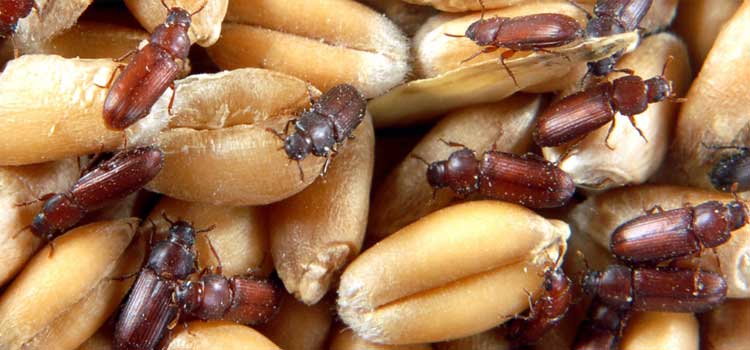
Pirimiphos-methyl is applied as a dust, spray, or fumigant to protect stored grains from infestation. For example, in peanut storage, it has demonstrated equal or superior efficacy compared to standard treatments, significantly reducing insect populations without compromising grain quality.
Agricultural Crop Treatment
Vector Control
Livestock Management
Incorporated into ear tags for cattle to repel flies and mites, reducing disease transmission and improving animal welfare.
Broad-Spectrum Efficacy
Effective against multiple pest life stages (larvae, adults) and resistant strains, making it a valuable tool in integrated pest management (IPM).
Residual Activity
Provides long-lasting protection in stored grains and structures, reducing the need for frequent reapplications.
Low Water Solubility
Minimizes leaching into water sources, though precautions are necessary during application near aquatic ecosystems.
Flexibility in Formulation
Available as emulsifiable concentrates (EC), dusts, and impregnated materials (e.g., ear tags), adaptable to diverse agricultural and public health needs.
Overcoming Resistance
Demonstrates efficacy against pests resistant to other organophosphates, such as certain mosquito populations.
Pirimiphos-methyl remains a critical insecticide for global food security and public health due to its versatility, efficacy, and residual activity. While its organophosphate nature demands cautious handling, advancements in formulation technology (e.g., controlled-release ear tags) and IPM strategies continue to enhance its safety and sustainability. Future research should focus on minimizing environmental impact and developing resistance management protocols to ensure its long-term viability in pest control.